 AttendMe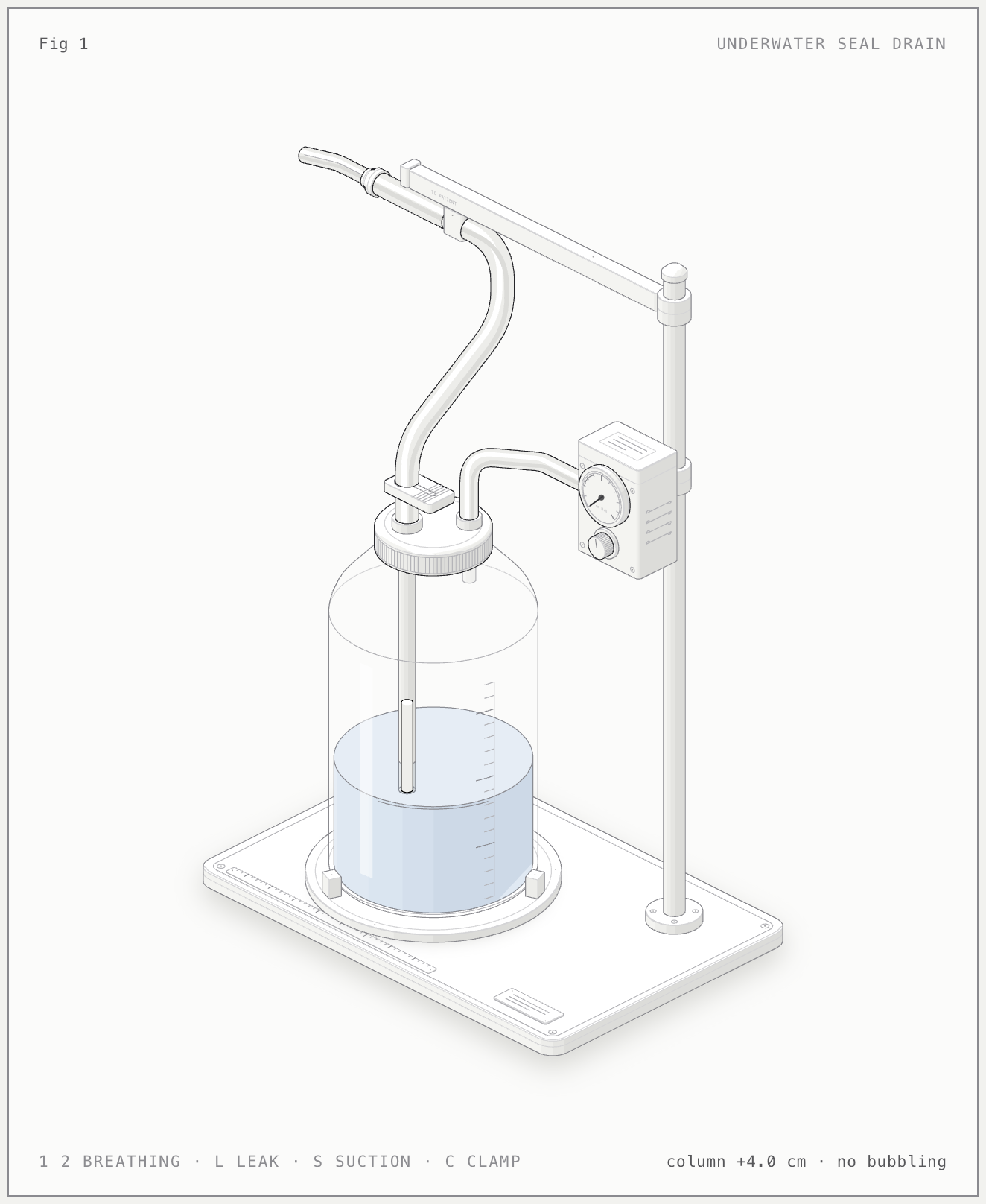
A model you can question
This development prototype lets you explore the diagram's existing controls. Its pressure model and wording are illustrative and have not received independent clinical review.
Explore the preview
Use the prototype below to inspect how the drawing communicates relationships. Change one labelled control at a time. The task is to create a mechanism question you can take to a clinical source.
Read the drawing
Find the labelled equipment and the water seal. Read the development status before changing the model. The original anatomy-kit source and MIT licence are linked below.
Change one illustrative state
Select Spontaneous breathing, then Ventilated. Explore the Air leak and Suction controls separately. Use Reset preview between comparisons. The labelled controls support touch; the prototype also retains its keyboard controls.
Record a review question
Use this structure: control selected; visual change observed; mechanism question; source needed to check it. For example, ask which relationship the change is intended to illustrate. An observed animation establishes what the prototype draws, not a verified physiological response.
What this preview establishes
The preview demonstrates the intended learning experience: labelled equipment, visible relationships and controlled changes. It is not a clinical management tool or a validated physiological prediction.
Explore the existing prototype
Development preview. The controls and illustrative model have not received independent clinical review.
Use the labelled controls inside the preview. This is an educational design study, not clinical guidance.